

Who Owns Prioritization in Product Teams?
Who owns prioritization? Set clear decision rights, weigh evidence against strategy, and keep product teams shipping work that matters most each quarter.


A roadmap slips for a familiar reason: five stakeholders each believe their request is the top priority, while nobody has the authority or mechanism to make the trade-off. The question of who owns prioritization is not a process detail. It determines whether a product team ships meaningful outcomes or spends each sprint reacting to the loudest conversation.
The answer is usually simpler than the behavior around it. One accountable product leader owns the final prioritization decision. That person does not work alone, and they should not make decisions in a vacuum. But input from executives, customers, sales, engineering, compliance, SEO, content, and operations is not the same thing as decision ownership.
When that distinction is missing, the backlog becomes a holding area for unresolved conflict. Engineers get interrupted, estimates become irrelevant, and delivery dates turn into guesses.
Who owns prioritization?
In a healthy product organization, the Product Owner or product manager accountable for the product area owns prioritization. In larger organizations, this may be a Group Product Manager, Head of Product, or a designated portfolio owner making choices across several teams. The title matters less than the decision rights.
The owner is accountable for putting work in a clear order, explaining why that order exists, and revisiting it when material evidence changes. They are also accountable for saying no, not yet, or not without a trade-off.
That does not mean a product leader can unilaterally override business reality. A CEO may set a non-negotiable commercial goal. Legal may identify a deadline tied to regulation. A security team may flag a risk that must be addressed before release. Engineering may identify a platform failure that threatens reliability. These are legitimate constraints.
The product owner’s job is to turn those constraints, opportunities, and requests into an executable sequence of work. If leadership wants a major launch in Q3, for example, someone still needs to decide what moves out of Q3 to create capacity. Declaring everything critical is not prioritization.
Accountability is not the same as consultation
Many teams try to be collaborative by giving every stakeholder equal authority over the backlog. The result is usually slower decisions and less transparency, not better collaboration.
Good collaboration means the decision owner actively seeks the information needed to make a sound call. They should understand customer impact, expected commercial value, delivery effort, dependencies, technical risk, compliance exposure, and the cost of delay. They should involve the people who will build, support, market, or be affected by the work.
But after consultation, there must be a decision. A stakeholder forum that ends with “let’s include all of it” has only postponed the hard part.
A useful operating model separates four roles:
- Decision owner: Makes the final ranking and is accountable for the outcome.
- Contributors: Provide evidence, constraints, estimates, and domain expertise.
- Approvers: Confirm specific commitments when authority is genuinely required, such as budget, legal exposure, or strategic direction.
- Informed stakeholders: Receive the decision, the rationale, and any impact on their plans.
This structure prevents two common failures. First, executives are not forced into daily backlog management. Second, product teams do not mistake stakeholder requests for committed work.
The executive team owns strategy, not sprint order
Founders and executives often need to influence priorities heavily. They own company direction, investment choices, revenue targets, market focus, and acceptable risk. A product team that ignores those inputs is not autonomous. It is disconnected.
However, executives should not need to negotiate individual tickets in sprint planning. Their role is to make strategic intent clear enough that the product leader can make coherent decisions underneath it.
Consider a multi-market affiliate product. Leadership may decide that expansion into a new regulated market is the company’s most important commercial bet. That is a strategic decision. The product owner then owns the operating decisions: whether licensing support comes before localized content workflows, whether payment methods block launch, which supplier integration is critical, and which existing roadmap items must wait.
The same applies to a gaming platform facing a regulatory deadline. Compliance may define what is mandatory and when. Engineering may explain that the current architecture cannot safely support a requested feature in the same release. The product owner makes the trade-offs visible, proposes a sequence, and escalates only the decisions that exceed their authority.
This is faster than asking the executive team to arbitrate every conflict. It also gives leaders a reliable view of what their strategic choices actually cost.
Engineering owns feasibility and technical risk
Engineering should not be handed a ranked list and expected to comply silently. Product priorities that ignore architecture, reliability, security, dependencies, or operational load are not disciplined priorities. They are wishes.
Engineering leaders own technical judgment. They should make risk concrete: what can break, what will become expensive later, what dependency could delay delivery, and what level of confidence exists in an estimate. They should also propose options, not just objections.
For example, a request to launch a new checkout flow might appear commercially urgent. Engineering may show that the fastest path creates reconciliation risk across payment providers, while a slightly narrower first release can ship safely within the target window. The product owner weighs that information against the business goal and makes the scope decision.
Technical debt belongs in the same conversation. It should not be treated as engineering’s private backlog, nor should it be dismissed whenever a customer-facing request arrives. If unresolved debt increases incident rates, slows future releases, or blocks a revenue-critical initiative, it is a product and business priority. The evidence should be visible enough to rank it properly.
A ranked backlog needs a decision cadence
Ownership fails when prioritization happens only during planning week or when a senior stakeholder happens to ask for an update. The backlog needs a regular decision cadence tied to business planning and delivery reality.
For most teams, that means reviewing near-term priorities weekly, reassessing upcoming work every few weeks, and conducting a more substantial roadmap review each quarter. The exact rhythm depends on the product’s volatility. A global event brand responding to live programming may need faster decisions than an enterprise platform with annual procurement cycles.
What matters is that each review answers practical questions. What changed since the last decision? What evidence supports moving an item up or down? Which commitments are now at risk? What must be removed if new work is added? Who is accountable for the next call?
Without this cadence, teams end up with a roadmap that looks stable in slides while the actual queue changes through private messages, urgent meetings, and side agreements.
Prioritization should produce visible trade-offs
A priority is only real when it changes what the team does next. If an item moves to the top but nothing moves down, the organization has added work rather than prioritized it.
The decision owner should make trade-offs explicit in language stakeholders can understand: “We can support the partner launch by June, but the customer account redesign moves to August.” Or: “We can include this market in the release, but only with the existing payment method. Adding the local provider requires another six weeks and pushes the date.”
This can feel uncomfortable, particularly in organizations where stakeholders are used to hearing yes. Yet clear trade-offs are more respectful than false certainty. They let commercial teams reset expectations, give engineering a stable target, and allow leadership to decide whether the benefit justifies additional investment.
A simple scoring model can help, but it cannot replace judgment. Revenue potential, customer impact, strategic alignment, effort, risk, confidence, and time sensitivity are useful inputs. They are not an automatic answer. A low-effort request can still distract from a critical strategic bet. A high-effort platform investment can be the right choice if it removes a constraint holding back every future release.
When there is no clear owner
If nobody can answer who owns prioritization, start by naming an interim owner for each product area. Give that person access to strategy, delivery data, customer evidence, and engineering input. Make the boundaries of their authority explicit, including which decisions require executive escalation.
Then clean up the backlog. Separate committed work from ideas, defects, mandatory obligations, discovery, and technical investments. Remove duplicates. Challenge items with no clear problem statement or expected outcome. A backlog is not a museum of every request the company has received.
Finally, publish decisions and their rationale. People do not need to agree with every outcome, but they need to know how it was reached and what changed because of it. That is how trust is built in a remote-first organization where informal hallway alignment does not exist.
Prioritization works when one person is accountable for the order, everyone relevant can contribute evidence, and the cost of every new commitment is visible. The next time a stakeholder asks for something to be made urgent, do not begin with the ticket. Begin with the trade-off.
Written by Veljko Barnić
Product Owner and delivery consultant in Belgrade. Six years leading end-to-end delivery for affiliate and iGaming platforms, and open to Head of Product, Head of Delivery and senior product roles.
More on delivery

Fractional Product Owner vs Consultant Explained
Compare a fractional product owner vs consultant to identify the support your team needs for backlog control, decisions, delivery cadence, and releases.
Read the article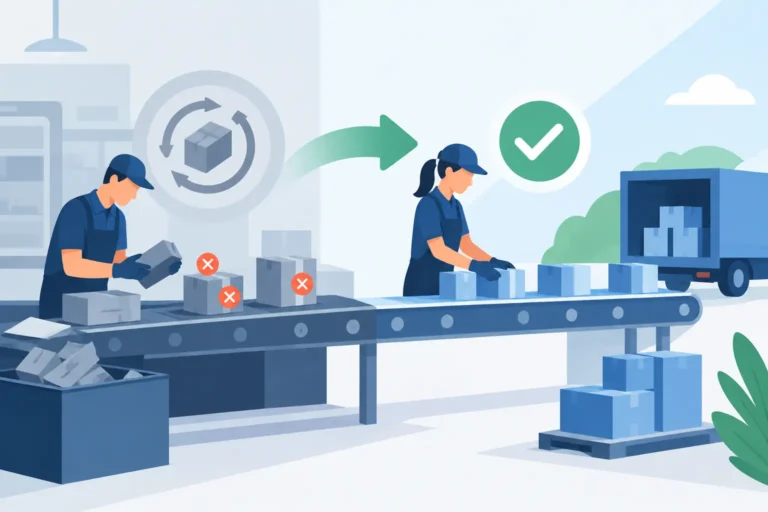
How to Reduce Product Rework Without Slowing Delivery
Learn how to reduce product rework by fixing unclear decisions, weak discovery, and release gaps before they turn into expensive delivery churn at scale.
Read the article
When Fractional Product Services Actually Work
Fractional product services give stalled teams senior ownership, clear priorities, accountable decisions, and reliable releases without a full-time hire.
Read the articleSomething isn't shipping. Let's find out why.
Send me three sentences about what's stuck, or take the free 30-minute call. Either way you'll get an honest read - including if the answer is that you don't need me.