

When to Hire Product Leadership and Why
Know when to hire product leadership before delivery delays, priority fights, and unclear ownership turn a busy team into a costly bottleneck at scale.


A roadmap can look credible right up until the team tries to deliver it. Features are listed, deadlines exist, and every stakeholder can explain what matters most. Then engineering starts receiving conflicting requests, QA finds requirements that were never agreed, and releases become negotiations rather than routine work.
That is usually when to hire product leadership becomes the wrong question. The more useful question is whether someone already has clear, accountable ownership of turning business priorities into work a team can actually ship.
Hiring a senior product leader is not a maturity badge. It is a response to a specific operating problem: the organization has more important work, dependencies, and decisions than its current product and delivery model can handle.
The clearest signal: work is moving, but outcomes are not
A busy team is not necessarily an effective team. If people are closing tickets while releases keep slipping, customer problems remain unresolved, or commercial goals keep moving further away, the issue is rarely effort. It is usually a failure in prioritization, decision-making, or delivery control.
You may see this in a product backlog that grows every week but has no meaningful order. Everything is labeled urgent. Old stakeholder requests remain beside regulatory changes, revenue opportunities, defects, and technical work. Nobody can explain what will not be done, or why.
A product leader should make that trade-off visible. That does not mean personally approving every ticket. It means establishing a decision process that connects the backlog to business goals, customer evidence, operational risk, and engineering capacity.
For a gaming platform, that could mean deciding whether a market-specific compliance requirement must take precedence over a retention feature. For an affiliate product, it could mean choosing between new partner integrations and fixing a conversion leak in an existing flow. Neither decision is purely product, technical, or commercial. Someone needs to own the call, document it, and carry it through delivery.
When to hire product leadership: recurring symptoms
One missed deadline does not justify a senior hire. Complex work slips sometimes, especially where suppliers, payments, security reviews, content teams, or external platforms are involved. The concern is repetition without learning.
Hire product leadership when the same failure patterns appear across quarters: priorities are reset without a clear decision; requirements reach engineering half-formed; scope expands after development begins; or teams repeatedly discover acceptance criteria during QA. These are not isolated process issues. They show that ownership is fragmented.
Another strong signal is that senior executives have become the product operating system. If a founder, CTO, or commercial leader is constantly resolving ticket disputes, interpreting requirements, chasing status updates, and deciding release scope, the organization has a capacity problem. Their involvement can be valuable for strategic decisions. It becomes costly when it is the only way routine delivery decisions get made.
Watch for these four patterns in particular:
- Stakeholders bypass the backlog and go directly to developers because they do not trust the prioritization process.
- Engineering estimates change late because the team receives context after work has started.
- Product managers spend most of their time collecting updates rather than making decisions and validating outcomes.
- Releases require a last-minute sweep of unresolved dependencies, ownership gaps, and unclear acceptance criteria.
Any one of these can be repaired. Several at once usually require experienced leadership with enough authority to reset the operating model.
Do not hire for ceremony when you need ownership
Many organizations respond to delivery pain by adding rituals. More standups, more planning meetings, more templates, more Jira fields. Those may create visibility, but they do not create decisions.
The right product leader brings operating discipline, not process theater. They should be able to ask direct questions: What customer or business problem does this solve? Who owns the decision? What evidence supports its priority? What has to be true for this release to be safe? What is being deferred to make room for it?
That approach can feel uncomfortable where stakeholders are used to keeping every option open. But an unranked backlog is not flexibility. It is deferred conflict handed to the delivery team.
A capable Head of Product, senior Product Owner, or Head of Delivery will also work differently depending on the problem. If product direction is sound but execution is unreliable, the focus may be on backlog quality, definition of ready, estimation practices, release gates, and dependency ownership. If the team ships consistently but cannot show commercial impact, the work may center on discovery, KPI definitions, experiments, and roadmap choices.
The role title matters less than the mandate. Do not hire a Product Owner and expect them to resolve executive-level strategy conflicts without authority. Do not hire a Head of Product to run daily delivery mechanics if the real need is an embedded operator who can prepare work, unblock decisions, and stabilize releases.
Your stage matters, but complexity matters more
Early-stage companies often delay product leadership because speed feels more valuable than structure. Sometimes that is reasonable. A small founding team with one product, direct customer contact, and a short path from decision to release may not need a full-time senior leader yet.
The trigger is not headcount alone. It is complexity. A 15-person team can need product leadership before a 75-person company if it operates across multiple markets, handles regulated payments, depends on external suppliers, or has competing revenue lines. Each additional dependency creates more chances for assumptions to go untested and decisions to go ownerless.
Conversely, a larger company may not need another senior product hire if it already has clear product ownership, trusted delivery practices, and leadership capacity. Adding a leader to an unclear structure can simply add another layer of reporting.
Ask a practical question: can the team explain the next six to eight weeks of work, why it is ordered that way, who can change that order, and what success will look like after release? If the answer is inconsistent across product, engineering, commercial, and operations, the gap is real.
Choose the engagement model that matches the gap
A permanent senior hire is appropriate when product leadership is a durable need and the organization can give that person a clear mandate, decision rights, and support from executive peers. It is the right move when product strategy, team development, portfolio decisions, and delivery oversight need sustained ownership.
But not every problem needs a full-time executive immediately. A fractional Product Owner or delivery leader can be a better first step when the priority is to stabilize an overloaded backlog, prepare a critical release, repair planning discipline, or assess where delivery is breaking down. Two or three days a week of focused ownership can create useful evidence before a permanent role is defined.
This is particularly effective after rapid growth, an acquisition, a platform migration, or a period where product work has been led informally by several functions. The first job is often diagnosis: map the decision flow, inspect the backlog, identify recurring blockers, and determine which commitments have no credible delivery path.
A short advisory or delivery audit can also prevent a costly mis-hire. If the apparent product problem is actually unresolved architecture, absent QA capacity, or an executive team that will not make trade-offs, no product leader can fix it alone. The organization needs to understand the constraint before assigning accountability.
What good product leadership changes first
The first improvements should be visible in the work, not just the org chart. Teams should know what is next, what is blocked, and who owns each decision. Requirements should contain enough context for engineering and QA to challenge assumptions before development begins. Release readiness should be assessed against agreed criteria rather than optimism.
Good product leadership also protects people from the human cost of ambiguity. When priorities change without explanation, teams redo work, absorb stakeholder frustration, and lose confidence in commitments. Clear trade-offs do not eliminate pressure, but they stop pressure from being distributed invisibly to the people doing the work.
For leaders, the payoff is better than prettier reporting. You get a credible view of what can ship, what cannot, what needs a decision, and what business result the team is pursuing. That makes planning more honest and intervention earlier.
If your organization is working hard yet repeatedly surprised by delivery, do not start by rewriting the roadmap. Start by identifying where ownership disappears between an idea, a decision, and a release. The right product leadership should make that path clear enough for the team to follow and accountable enough for the business to trust.
Written by Veljko Barnić
Product Owner and delivery consultant in Belgrade. Six years leading end-to-end delivery for affiliate and iGaming platforms, and open to Head of Product, Head of Delivery and senior product roles.
More on delivery

Fractional Product Owner vs Consultant Explained
Compare a fractional product owner vs consultant to identify the support your team needs for backlog control, decisions, delivery cadence, and releases.
Read the article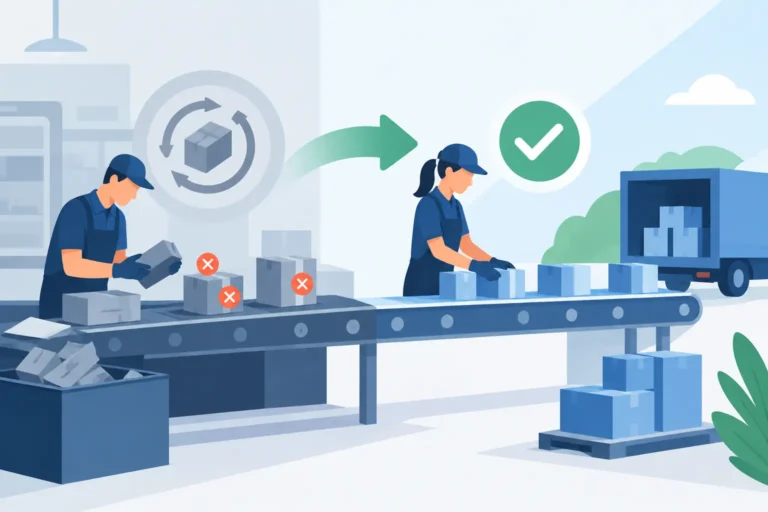
How to Reduce Product Rework Without Slowing Delivery
Learn how to reduce product rework by fixing unclear decisions, weak discovery, and release gaps before they turn into expensive delivery churn at scale.
Read the article
When Fractional Product Services Actually Work
Fractional product services give stalled teams senior ownership, clear priorities, accountable decisions, and reliable releases without a full-time hire.
Read the articleSomething isn't shipping. Let's find out why.
Send me three sentences about what's stuck, or take the free 30-minute call. Either way you'll get an honest read - including if the answer is that you don't need me.