

Product Delivery Governance Guide for Teams
This product delivery governance guide shows leaders how to assign decisions, control change, and ship predictable releases without adding daily ceremony.


A product delivery governance guide is not a request for more meetings, status decks, or approval gates. It is a way to stop expensive ambiguity: who can make a decision, what evidence is needed, what changes after work starts, and who is accountable for getting a release over the line.
When governance is missing, the symptoms look familiar. The backlog grows faster than the team can refine it. Executives ask for updates because they cannot trust the roadmap. Engineering receives work with open questions. QA finds late surprises. A release is labeled urgent, but nobody can clearly state the customer, revenue, compliance, or operational risk behind it.
Your roadmap is not always the problem. Delivery is often the problem.
What product delivery governance actually does
Product delivery governance creates a repeatable operating model for turning business intent into shipped, measurable product work. It should make decisions faster, not push them up a hierarchy. The purpose is to give teams enough structure to act with confidence while making trade-offs visible to the people who own them.
Good governance answers five practical questions:
- What outcomes matter now, and how will we measure them?
- Who owns prioritization, scope, technical approach, release readiness, and commercial sign-off?
- What must be true before a team starts, releases, or changes committed work?
- How are risks, dependencies, and unresolved decisions escalated?
- How does the organization learn from what shipped?
The answer will differ by context. A regulated casino platform needs clear evidence for compliance, payment, responsible gaming, and market-level release decisions. An affiliate product may need sharper governance around tracking accuracy, commercial partner requirements, SEO impact, and content dependencies. A consumer app moving quickly may use lighter controls, but it still needs an accountable owner for customer impact and release risk.
Governance is not agile theater. If the process cannot help a team decide whether to delay a release, cut scope, or reject a late stakeholder request, it is not doing useful work.
Start with the delivery failures, not a framework
Teams often adopt a governance model because a consultant, board, or delivery leader says they need one. That produces generic templates and little behavioral change. Start instead with the failure patterns already costing the business time and trust.
If stakeholders regularly reopen decisions, the gap is decision ownership. If engineers are blocked waiting for clarification, the gap is product readiness. If releases slip after work is supposedly complete, the gap is likely definition of done, dependency management, or release ownership. If every request is urgent, the gap is portfolio prioritization.
Run a short diagnostic across active initiatives. Look at work that is late, blocked, reworked, or released with defects. Ask where the initial decision was unclear, where an assumption went untested, and where an owner had authority in theory but not in practice. This creates a governance design based on actual friction rather than organizational fashion.
A useful rule: govern the points where a bad decision is expensive or hard to reverse. Do not add controls simply because another company has them.
Define decision rights before building ceremonies
The fastest way to improve delivery is often to make ownership explicit. Product organizations commonly confuse being consulted with being accountable. A large group may have valuable input, but one person still needs to decide.
For each meaningful decision, document the accountable owner, required contributors, decision deadline, and the information needed to decide. Keep this close to the work, not hidden in a process document nobody uses.
A typical division of responsibility might look like this in practice: the product lead owns priority and customer-value trade-offs; engineering owns technical design and feasibility; a delivery lead owns flow, dependency visibility, and operating cadence; QA owns quality evidence; and a business, compliance, or operations owner accepts market-specific risk. In smaller teams, one person may hold multiple roles. That is fine if the decision rights remain clear.
The common mistake is assigning every function a veto. Security, legal, finance, content, and commercial teams should be involved at the right moment, with clear service expectations. They should not discover release-critical work days before launch, nor should their late involvement become an excuse for nobody to make a call.
Use a small set of delivery controls
A product delivery governance model should be visible in everyday work. Most teams do not need a committee for every initiative. They need a few reliable controls at the moments when uncertainty is highest.
1. An outcome-based intake and priority decision
Every significant request should state the problem, intended outcome, target customer or market, expected impact, constraints, and urgency rationale. This does not require a long business case. It does require more than a stakeholder saying they need a feature.
Prioritization should balance value, risk, effort, timing, and strategic fit. It also needs a named owner who can say no, not now, or yes with conditions. Without that authority, the backlog becomes a collection of competing promises.
2. A definition of ready that protects engineering time
Work is ready when the team understands the customer problem, acceptance criteria, key edge cases, dependencies, data needs, and unresolved decisions. For regulated or multi-market products, readiness may also require legal interpretation, localization, supplier confirmation, or payment-flow validation.
Do not confuse ready with fully specified. Teams need room to solve problems. But they should not begin work while product, commercial, or policy questions are still waiting for an owner.
3. A definition of done that includes operational reality
Code complete is not done. A usable definition of done may include test evidence, analytics, documentation, support readiness, monitoring, security checks, deployment confirmation, and stakeholder acceptance where it is genuinely required.
The exact checklist depends on the product. A small experiment should not carry the same burden as a payment migration. The point is proportional control: enough evidence to release responsibly, without turning every change into a major program.
4. A change-control rule for committed work
Scope will change. Pretending otherwise creates hidden work, inaccurate forecasts, and frustrated teams. The governance question is not whether change is allowed. It is what changes when a new request enters an active commitment.
Make the trade-off explicit. A new item may replace planned work, extend the date, require more capacity, or be parked for the next cycle. The accountable product owner and delivery owner should record that decision and communicate it. This prevents teams from quietly absorbing commercial pressure until quality and predictability collapse.
5. A release decision with real evidence
Release readiness should be a decision, not a ritual. The owner needs a concise view of known defects, rollback options, monitoring, dependencies, customer communication, support implications, and any accepted risk.
For higher-risk releases, identify who can stop the launch and who can authorize proceeding with known issues. Those are different decisions. Naming them ahead of time avoids last-minute escalation theater.
Create cadence without turning it into bureaucracy
Governance needs rhythm. The right cadence gives leaders enough visibility to intervene early and gives teams protected time to deliver.
A weekly delivery review is usually enough for active initiatives. Review progress against outcomes, upcoming decisions, dependency status, forecast confidence, and risks needing escalation. Avoid turning it into task-by-task reporting. If the meeting cannot identify an owner and next step for a red item, it is only a status meeting.
At a broader level, a monthly portfolio review can test whether current investment still supports business goals, OKRs, KPIs, and experiment results. This is where leaders should stop low-value work, resolve cross-team capacity conflicts, and challenge initiatives that have lost their rationale.
The trade-off is simple. Too little cadence means surprises travel upward too late. Too much cadence means senior people consume time reviewing work they have already delegated. Adjust based on delivery risk, team maturity, and the cost of a failed release.
Measure governance by delivery behavior
Do not judge governance by the number of templates completed or meetings held. Look for changes in operating behavior: fewer blocked items, less unplanned rework, clearer forecast confidence, faster decisions, more stable release windows, and better visibility into why priorities changed.
Also measure outcome quality. A team can ship predictably while delivering low-value work. Connect delivery reporting to product signals such as conversion, retention, revenue, cost reduction, compliance incidents, support volume, or experiment results.
When a commitment slips, do not default to blaming estimation. Review the chain of decisions. Was the work oversized? Did a dependency remain invisible? Did a stakeholder change scope without a trade-off? Was the technical risk known but not funded? This is where governance becomes a management tool rather than a reporting layer.
Keep the model useful as the organization changes
The best governance model is revised when evidence says it is no longer helping. A startup moving from one product team to five needs more dependency management and portfolio clarity. A business entering regulated markets needs stronger release and compliance controls. A mature platform may need to simplify approvals that once made sense but now slow routine work.
Start small, make ownership visible, and review the model after several delivery cycles. If a control does not prevent a real failure or speed up a real decision, remove it. The goal is not a perfect process. It is a team that can make informed commitments, surface risk early, and finish what it starts.
Written by Veljko Barnić
Product Owner and delivery consultant in Belgrade. Six years leading end-to-end delivery for affiliate and iGaming platforms, and open to Head of Product, Head of Delivery and senior product roles.
More on delivery

Fractional Product Owner vs Consultant Explained
Compare a fractional product owner vs consultant to identify the support your team needs for backlog control, decisions, delivery cadence, and releases.
Read the article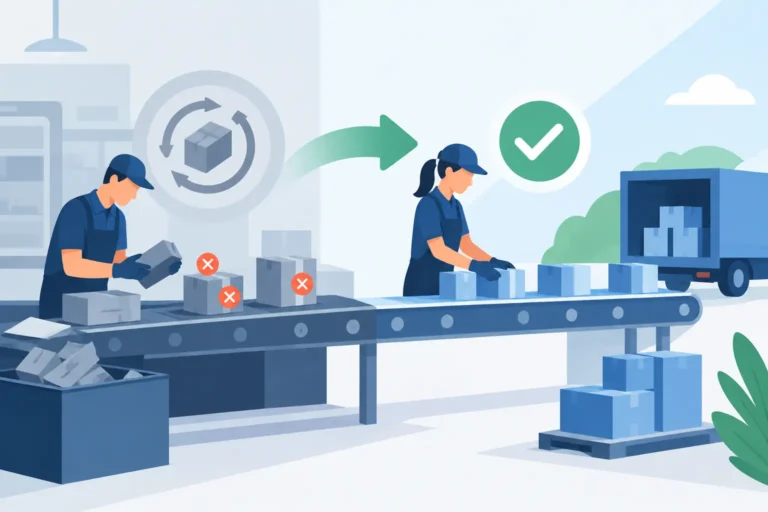
How to Reduce Product Rework Without Slowing Delivery
Learn how to reduce product rework by fixing unclear decisions, weak discovery, and release gaps before they turn into expensive delivery churn at scale.
Read the article
When Fractional Product Services Actually Work
Fractional product services give stalled teams senior ownership, clear priorities, accountable decisions, and reliable releases without a full-time hire.
Read the articleSomething isn't shipping. Let's find out why.
Send me three sentences about what's stuck, or take the free 30-minute call. Either way you'll get an honest read - including if the answer is that you don't need me.