

Product Advisory That Gets Teams Shipping Again
Product advisory brings order to competing demands, stalled decisions, and risky releases so digital teams can plan, build, and ship with control and confidence.


A full backlog is not evidence of a healthy product organization. Neither is a roadmap full of initiatives, a busy engineering team, or a calendar packed with planning sessions. If releases keep slipping, requirements change mid-sprint, and nobody can explain what should happen next, the problem is execution. Product advisory exists to make that execution visible, owned, and workable.
For founders, product leaders, and engineering leaders, this is usually not a question of whether people are working hard. They are. The issue is that competing commercial, technical, compliance, content, and customer demands are arriving faster than the team can make decisions about them. Work enters the system without a clear outcome, a committed owner, or an honest view of its delivery cost.
What product advisory actually fixes
Product advisory is not a set of generic workshops about product strategy. It is hands-on senior product leadership focused on the gap between what the business wants and what the team can reliably deliver.
That gap shows up in familiar ways. Sales has promised a feature before discovery is complete. Engineering is carrying platform debt that never reaches the roadmap. QA learns about release scope too late. A stakeholder says an item is urgent, but cannot explain the customer, revenue, risk, or contractual consequence behind it. Product managers are busy translating requests but lack the authority or information to force a decision.
The result is predictable: everything appears important, so the team starts too much and finishes too little.
An effective advisory engagement addresses the operating system behind those symptoms. It establishes how requests enter the backlog, how priorities are decided, what “ready” means before development starts, who owns open decisions, and how release readiness is assessed. The aim is not more process. It is less ambiguity at the moments where ambiguity creates delay and rework.
Your roadmap may be reasonable. Your delivery system may not be.
Teams often respond to missed dates by rebuilding the roadmap. Sometimes that is necessary. More often, the roadmap is only exposing a deeper issue: the organization has no dependable mechanism for turning intent into released value.
Consider a platform business operating across several markets. A seemingly simple payment-method request may involve local customer expectations, payment provider dependencies, security review, regulatory constraints, finance reconciliation, support documentation, analytics, and release coordination. Calling it a small feature because the interface change is small does not make the work small.
A senior product operator makes that work legible before a date is committed. They clarify the outcome, map dependencies, surface constraints, and make the trade-off explicit. The business can then choose to reduce scope, move another priority, accept additional risk, or delay the commitment. What it should not do is pretend all four choices are available at once.
This matters especially in affiliate products, gaming platforms, media businesses, and global digital brands, where a missed dependency can create revenue loss, compliance exposure, or a poor customer experience at scale. Delivery discipline is not bureaucracy in these environments. It is risk management.
The advisory work starts with evidence
The first task is diagnosis, not prescription. A delivery audit should look at the actual flow of work: backlog quality, planning cadence, decision history, estimation patterns, handoffs, defects, blocked items, release records, and the gap between planned and completed work.
This is where the uncomfortable facts usually appear. The roadmap may contain initiatives with no measurable outcome. Tickets may enter development without acceptance criteria. Teams may estimate work before dependencies have been identified. Or a small group of executives may be making priority calls informally, leaving product and engineering to absorb the resulting churn.
The purpose is not to assign blame. It is to identify where delivery loses time, confidence, and accountability. A team cannot improve a bottleneck it has not named.
Product advisory creates a decision cadence
Most delivery problems are decision problems wearing a project-management disguise. Teams wait because nobody has chosen between two legitimate priorities, approved a necessary trade-off, or defined what is acceptable for a first release.
A useful operating cadence gives those decisions a home. Product, engineering, design, QA, and relevant business owners need regular forums with clear inputs and clear outputs. That might include backlog refinement for upcoming work, a weekly priority review for new demands, and release readiness checks for work about to reach customers. The exact rhythm depends on the business, the product’s risk profile, and how frequently it releases.
What does not work is turning every meeting into a status update. Status is useful only when it triggers an action. A blocked integration needs an owner and a deadline for resolution. A scope question needs a decision-maker. A launch risk needs a documented acceptance or a plan to reduce it.
This approach gives stakeholders something more useful than reassurance: visibility into the choices being made. When a new request displaces committed work, everyone can see what moves and why. That transparency reduces the backchannel escalation that damages trust in product teams.
The backlog becomes a delivery instrument
An unprioritized backlog is a storage unit for anxiety. It holds old ideas, executive requests, customer complaints, defects, technical work, and speculative opportunities in one place, then asks a delivery team to figure out what matters.
Product advisory turns that backlog into an active management tool. Work is ranked against agreed criteria such as expected business impact, customer need, operational or regulatory risk, effort, confidence, and dependency cost. Not every item needs a complex scoring model. In fact, excessive scoring can create false precision. But every meaningful item needs a reason for its position.
The standard should also change as work gets closer to development. A broad roadmap item can be uncertain. A story entering a sprint cannot. Before a team commits, it should understand the user or business problem, scope boundaries, acceptance criteria, known dependencies, and how success will be checked. If those details are unavailable, the correct response is not to begin coding and hope. It is to do the discovery needed to reduce uncertainty.
That discipline protects engineers from becoming default decision-makers on business questions. It also protects product leaders from claiming predictability where none exists.
Good advisory adapts to the team’s real constraints
There is no universal answer to whether a company needs a fractional Product Owner, a delivery audit, or an interim Head of Product or Head of Delivery. It depends on where the constraint sits.
If the organization has a capable team but a chaotic intake process, a focused advisory engagement may be enough to reset prioritization and delivery controls. If critical initiatives lack day-to-day ownership, fractional Product Owner support two or three days per week can create immediate traction. If leadership itself is fragmented, an experienced senior product or delivery lead may need to take direct responsibility for the operating model and the roadmap.
The important distinction is between advice and ownership. A slide deck can describe a better process. It cannot attend the hard meetings, challenge weak assumptions, write the decision down, or follow work through release. The value comes from embedded operational leadership.
What better delivery looks like
The outcome is not a perfect roadmap or a backlog that never changes. Healthy product organizations still face new information, market shifts, incidents, and commercial pressure. The difference is that they can respond without losing control of the work already underway.
Priorities are visible and ranked. Teams know what must be true before they commit. Stakeholders understand the trade-offs behind sequencing. Risks are raised early enough to matter. Releases have explicit criteria rather than optimism as their main quality gate.
Over time, this creates more credible planning. Estimates improve because work is better understood before estimation begins. Sprint and release commitments become more reliable because fewer unknowns are hidden inside them. Product, engineering, QA, content, SEO, compliance, security, payments, and customer experience can coordinate around the same delivery reality rather than maintaining separate versions of the plan.
That does not mean every release arrives exactly on its original date. It means when plans change, the business knows early, understands why, and can make a conscious call about scope, investment, and risk.
Start with the work that is already hurting
The best place to begin is not a broad transformation program. Start with the release that keeps moving, the initiative with too many stakeholders, or the backlog that nobody trusts. Examine the work in detail, identify the decisions and dependencies holding it up, and put an owner against each unresolved issue.
Clarity is built through repeated operational choices. Make the next important one visible, make its trade-off explicit, and make sure someone is accountable for carrying it to completion.
Written by Veljko Barnić
Product Owner and delivery consultant in Belgrade. Six years leading end-to-end delivery for affiliate and iGaming platforms, and open to Head of Product, Head of Delivery and senior product roles.
More on delivery

Fractional Product Owner vs Consultant Explained
Compare a fractional product owner vs consultant to identify the support your team needs for backlog control, decisions, delivery cadence, and releases.
Read the article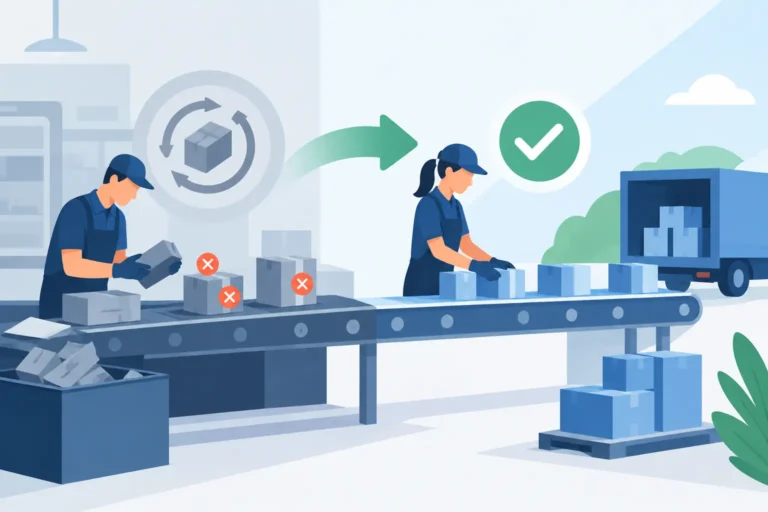
How to Reduce Product Rework Without Slowing Delivery
Learn how to reduce product rework by fixing unclear decisions, weak discovery, and release gaps before they turn into expensive delivery churn at scale.
Read the article
When Fractional Product Services Actually Work
Fractional product services give stalled teams senior ownership, clear priorities, accountable decisions, and reliable releases without a full-time hire.
Read the articleSomething isn't shipping. Let's find out why.
Send me three sentences about what's stuck, or take the free 30-minute call. Either way you'll get an honest read - including if the answer is that you don't need me.